
When Tommy Mac opened Paradise Falls in October 1993, the restaurant business looked completely different. There was no online ordering, no Instagram food photos, no Google reviews shaping your reputation. Success came from word-of-mouth, consistent quality, and becoming a genuine part of your community.
Fast forward to 2025, and while those fundamentals still matter enormously, they’re no longer enough on their own. Today’s successful family restaurants blend that old-school commitment to hospitality with smart digital strategies that help them reach new customers, build loyalty, and compete with corporate chains that have massive marketing budgets.
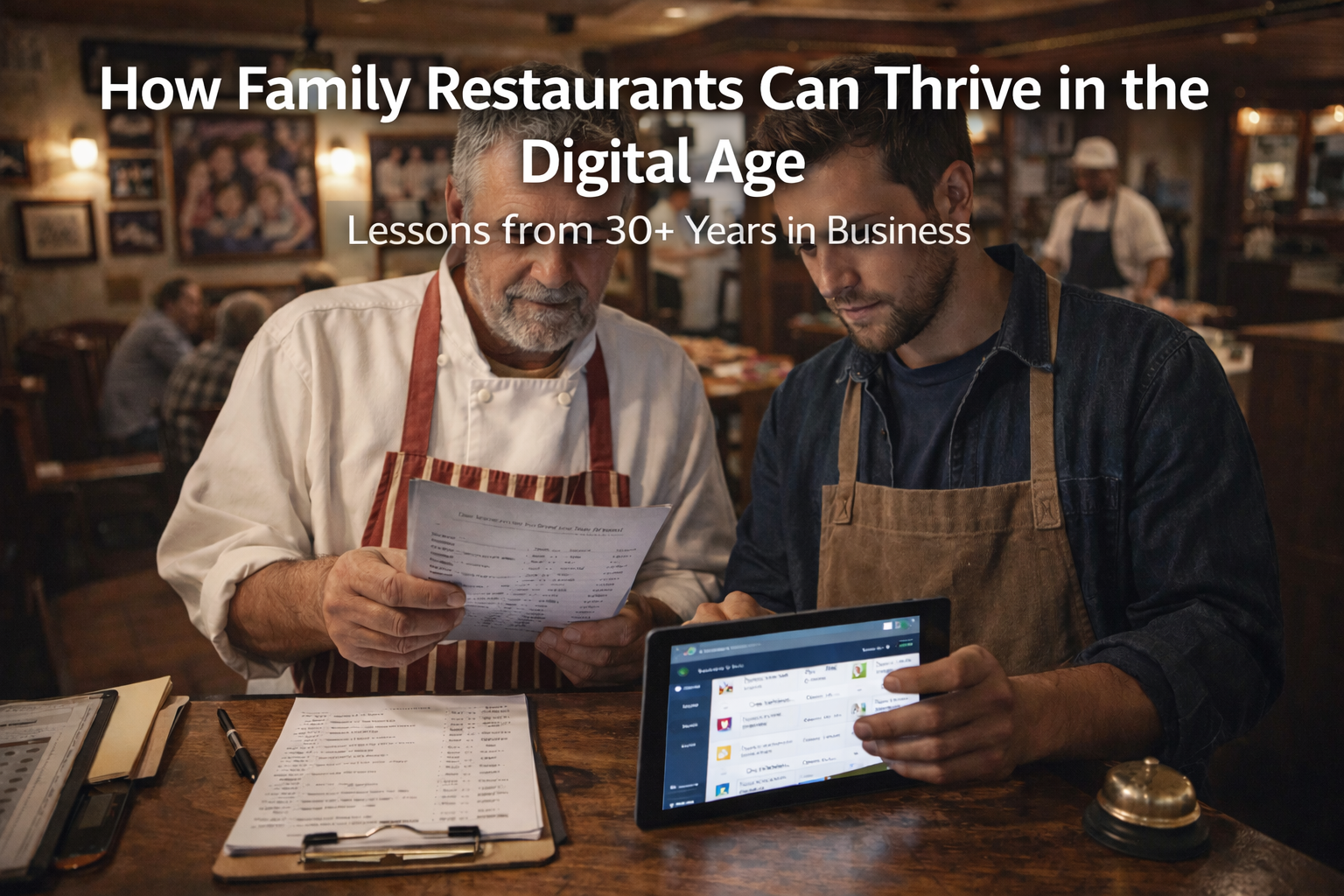
I’ve watched countless family-owned restaurants struggle with this transition. Some cling stubbornly to “the way things have always been done” and watch their customer base age out without replacement. Others jump headfirst into every new platform and trend, spreading themselves too thin and losing the authentic personality that made them special in the first place.
The restaurants thriving right now, the ones celebrating decades in business while still attracting new generations of diners, have figured out how to honor their heritage while embracing the tools that modern customers expect. Let’s break down exactly how family restaurants can build a digital presence that drives real business results without losing the soul that makes them worth preserving.
Your Website: The Foundation of Digital Success
Here’s a reality that surprises many restaurant owners: your website matters more than your social media presence. Way more. Social platforms are rented land where algorithms change constantly, and you never truly own your audience. Your website is the digital home you control completely.
When someone searches “best family restaurant Missoula” or “breakfast near me” and finds you, where do they land? If it’s an outdated website with broken links, tiny text, and no clear menu, you’ve lost that potential customer in about five seconds. They’ll click back to Google and try the next result.
Your restaurant website needs to accomplish several critical jobs quickly and effectively. First, it needs to load fast on mobile devices because most people are searching for restaurants on their phones. Second, it needs to show your menu clearly with prices, descriptions, and ideally photos of your most popular dishes. Third, it needs to make ordering or reserving a table as easy as possible. Fourth, it needs to communicate your story and what makes you different from the chain restaurants competing for the same customers.
Building a professional website used to require hiring expensive developers and designers, which put quality digital presence out of reach for many family restaurants operating on tight margins. That’s changed dramatically. Modern website platforms offer professionally designed templates specifically created for restaurants that you can customize with your own content, photos, and branding.
The key is choosing a template that fits your restaurant’s personality. A family steakhouse needs different visual treatment than a pizza joint or a breakfast cafe. The design should reinforce your brand identity rather than working against it.
Online Ordering: Meeting Customers Where They Are
The pandemic permanently changed how people interact with restaurants. Online ordering isn’t a temporary trend, it’s now a baseline customer expectation. Restaurants without easy online ordering options are leaving significant money on the table.
Here’s what surprises many restaurant owners: online ordering customers typically spend 15-20% more than in-person diners. There’s something about browsing a menu online that encourages people to add extras, upgrade sides, or throw in dessert. Plus, online orders are often more accurate because customers input exactly what they want rather than relying on phone communication where things get lost in translation.
Integration matters enormously here. Your online ordering system needs to connect seamlessly with your kitchen operations, your point-of-sale system, and your inventory management. Disconnected systems create chaos during busy periods when orders are coming in from multiple channels and staff are scrambling to keep everything organized.
The best online ordering experiences make it effortless for customers to customize orders, save favorite items for repeat ordering, and choose pickup or delivery options clearly. They also handle payment securely and send confirmation immediately so customers know their order was received and when it’ll be ready.
Email Marketing: The Most Underutilized Restaurant Tool
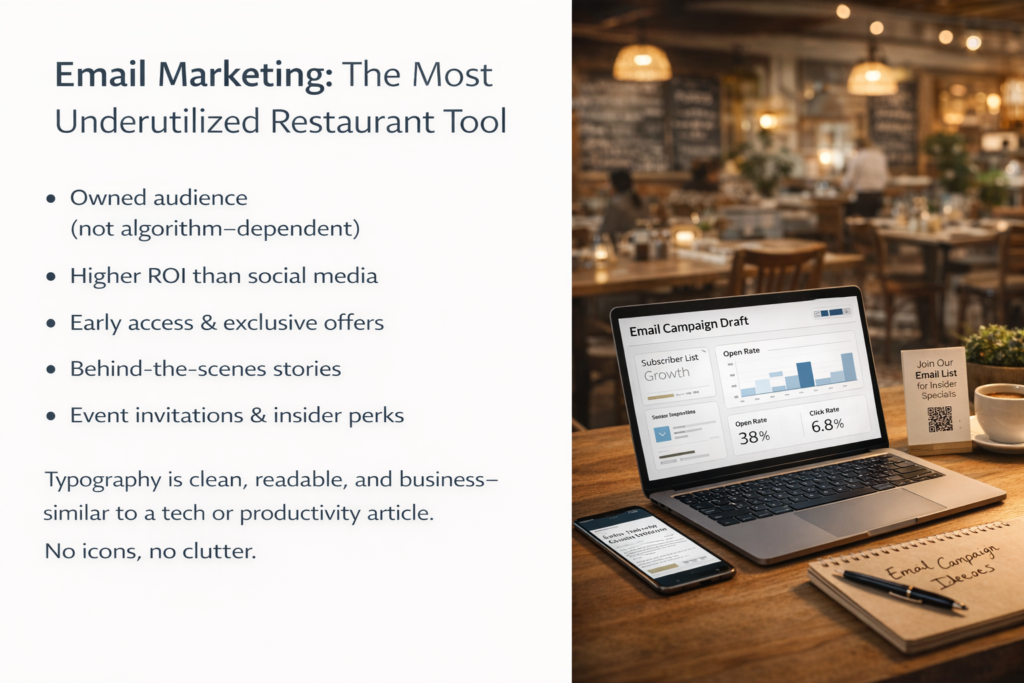
Social media gets all the attention, but email marketing consistently delivers better ROI for restaurants. Your email list is an audience you own, not an algorithm-dependent platform where your posts might reach 5% of your followers if you’re lucky.
The challenge most restaurants face with email marketing is building their list in the first place and then creating content that people actually want to receive, rather than immediately deleting. Nobody wants generic “here’s our menu” emails that add zero value.
Effective restaurant email marketing provides real value: early notice about new menu items, exclusive specials for subscribers, behind-the-scenes stories about your ingredients or preparation methods, or invitations to special events. The goal is to make people feel like insiders who get perks for being on your list.
Building your email list requires strategy. Offer something valuable in exchange for email addresses: a discount on first visit, entry into a monthly drawing for free dinner, or access to special menu items not available to walk-ins. Table tents, receipts, and your website should all promote the benefits of joining your email list.
When setting up email marketing campaigns, thorough testing ensures your emails render correctly across different email providers and devices. Auto-expiring email service l lets you create test accounts to verify how your emails appear in different inboxes, check that all links work correctly, and ensure images display properly. This testing step prevents embarrassing mistakes like broken links or formatting issues that make your restaurant look unprofessional.
The consistency of email marketing matters as much as the quality. Send regularly enough that people remember you (weekly or bi-weekly works well), but not so frequently that you become annoying. Track open rates and click-through rates to understand what content resonates with your audience and adjust accordingly.
Social Media: Authenticity Over Production Value
Instagram, Facebook, TikTok, every restaurant feels pressure to maintain an active social media presence. The mistake many make is thinking they need professional photography and highly produced content to succeed. That’s backwards for family restaurants.
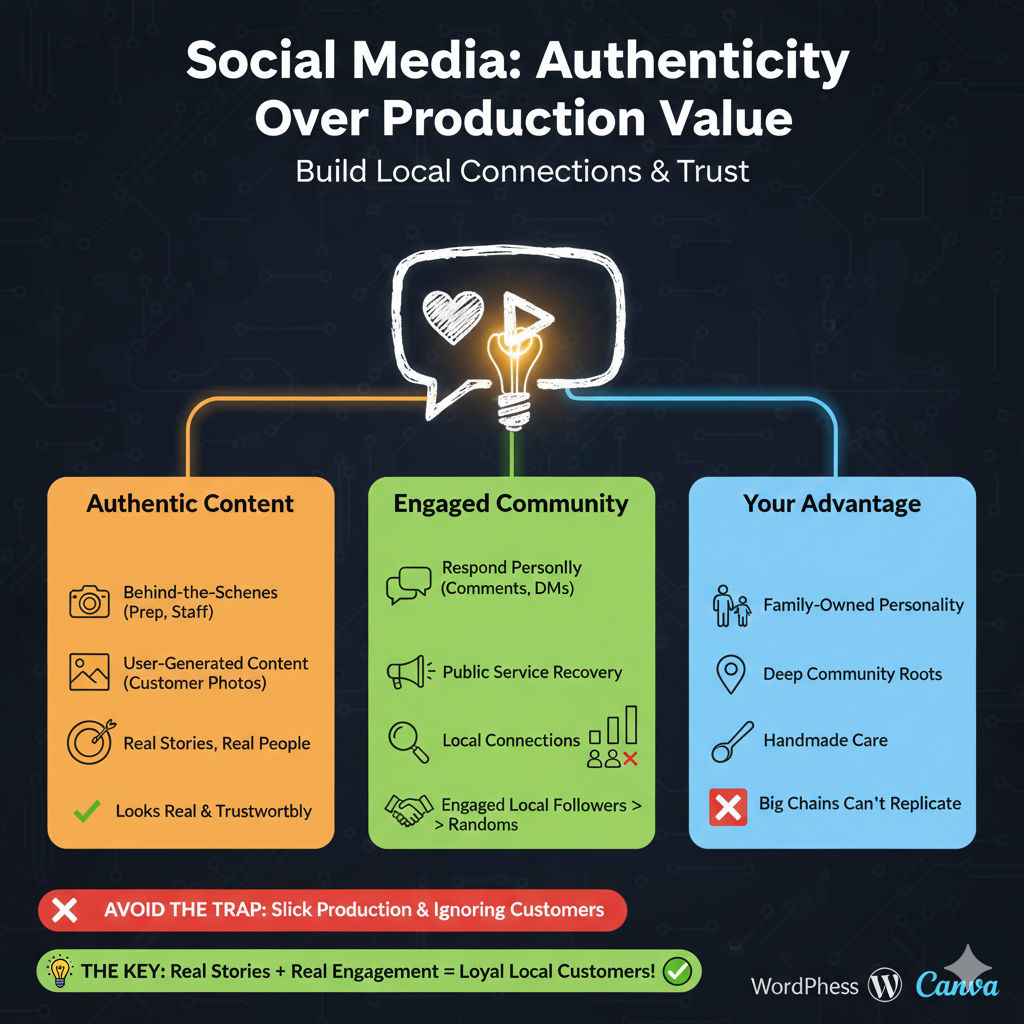
Your competitive advantage isn’t slick production, it’s authenticity. Big chains can afford professional photo shoots and expensive marketing campaigns. What they can’t replicate is the genuine personality, local connections, and real stories that come from being family-owned and deeply rooted in your community.
The most effective restaurant social media I’ve seen features behind-the-scenes content showing prep work, staff interactions, and the real people making food with care. Customer photos and user-generated content often perform better than professional shots because they look real and trustworthy.
Engagement matters more than follower count. A thousand engaged local followers who actually visit your restaurant and recommend you to friends delivers far more value than ten thousand random followers who will never set foot in Missoula.
Respond to comments and messages personally. When someone posts about their meal, thank them genuinely. When someone has a complaint, address it professionally and publicly, then follow up privately to resolve it. This visible customer service demonstrates that you care, which attracts customers who value that attention.
Managing Your Online Reputation
Reviews on Google, Yelp, Facebook, and other platforms significantly influence dining decisions. People trust online reviews almost as much as personal recommendations from friends. Managing your reputation isn’t optional anymore, it’s essential.
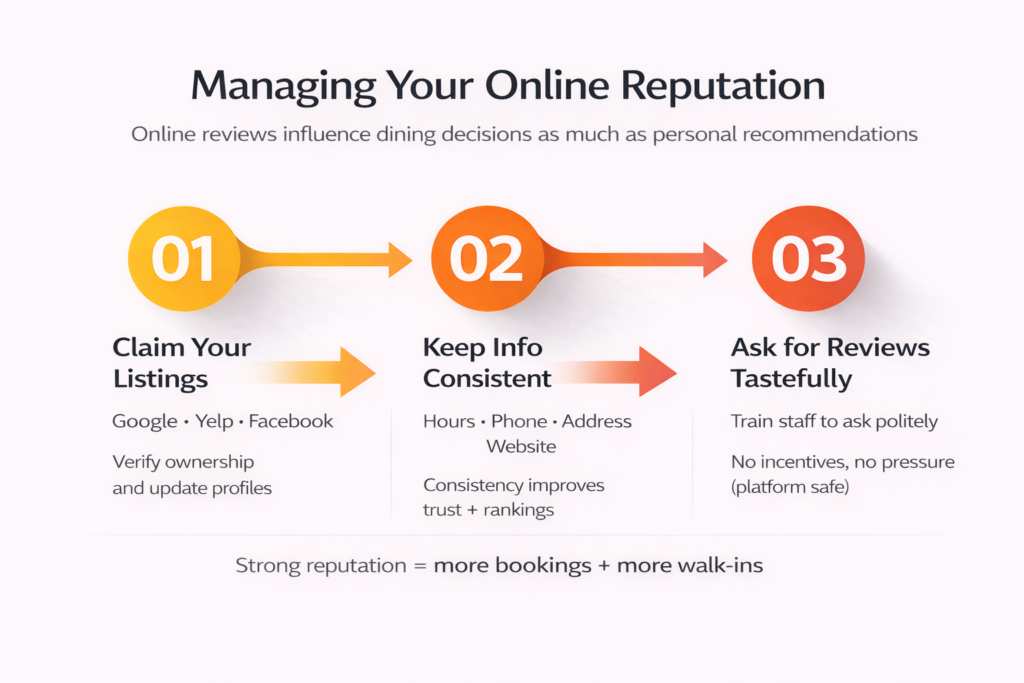
The first step is claiming your business listings on all major platforms. Make sure your information is accurate and consistent everywhere: correct hours, phone number, address, and website. Inconsistent information confuses potential customers and hurts your search rankings.
Encourage satisfied customers to leave reviews, but do it tastefully. Train your staff to mention, “If you enjoyed your meal, we’d really appreciate a quick review online” rather than pestering people or offering incentives which violates most platforms’ terms of service.
Respond to all reviews, positive and negative. Thank people who leave positive reviews genuinely and specifically. For negative reviews, respond professionally even when the criticism seems unfair. Apologize for their experience, explain what you’ll do differently, and invite them to give you another chance. Potential customers reading reviews notice how you handle criticism, and graceful responses to negative feedback often impress people more than the glowing reviews do.
Never argue with reviewers publicly or get defensive. Even when a review is completely unfair or factually wrong, getting into a public argument makes you look unprofessional and petty. Respond once professionally, then move on.
Leveraging Local SEO
When someone in Missoula searches “breakfast near me” or “best burgers Missoula,” you want your restaurant to appear in those results. Local SEO determines whether you show up or get buried under competitors.
Google My Business is the foundation of local SEO for restaurants. Keep your listing complete and updated with accurate hours, current photos of food and the restaurant interior, links to your menu, and regular posts about specials or events. The more complete and active your listing, the more Google trusts it and ranks it higher.
Encourage customers to add photos to your Google listing. User-generated photos boost engagement and help potential customers see what real meals look like, not just marketing images.
Build local citations by ensuring your restaurant is listed consistently across local business directories, chamber of commerce websites, and restaurant guides. These citations signal to Google that you’re a legitimate, established local business.
Create location-specific content on your website. A page titled “Best Family Restaurant in Missoula” or “Breakfast in Missoula, Montana” that includes local landmarks, neighborhood descriptions, and community connections helps Google understand your geographic relevance.
Staying True to Your Identity While Embracing Change
The biggest fear many family restaurant owners have about digital marketing is that it will somehow make them less authentic, that focusing on Instagram photos and email campaigns means losing the personal touch that made them successful.
This fear is understandable but misguided. Digital tools are just that, tools. They don’t change who you are or what you stand for. There are simply more efficient ways to share your story, connect with customers, and make it easy for people to choose your restaurant.
Paradise Falls has succeeded for over 30 years because Tommy Mac created something genuine, a welcoming place where great food meets authentic hospitality. That mission doesn’t change because you add online ordering or email marketing. Those digital tools just help you deliver that same mission to more people more effectively.
The restaurants struggling right now are those that haven’t adapted at all and those that abandoned their identity, trying to be something they’re not. The ones thriving have figured out how to be themselves more effectively using modern tools.
Your Path Forward
If your restaurant’s digital presence feels overwhelming or outdated, start with the foundations. Get your website right first, even if that means using a template rather than building custom. Claim and optimize your Google My Business listing. Start collecting email addresses and communicating with customers regularly.
Don’t try to be on every platform or implement every strategy simultaneously. Pick two or three priorities that will make the biggest difference for your specific restaurant and execute those well before expanding to other areas.
Remember that digital marketing for restaurants isn’t about replacing the personal connections and quality food that made you successful. It’s about scaling those strengths so more people can discover what makes your restaurant special.
The question isn’t whether to embrace digital tools. It’s whether you’ll do it strategically in ways that honor your restaurant’s identity while meeting modern customer expectations. Get that balance right, and you’re building something that lasts.
Conclusion
In the end, the restaurants that last aren’t the ones chasing every shiny new app or stubbornly pretending it’s still 1993. They’re the ones that understand something simple but powerful: technology doesn’t replace hospitality — it amplifies it.
A great website doesn’t take away your personality; it invites more people through your doors. Online ordering doesn’t cheapen the experience; it makes your food accessible on a busy Tuesday night when a family is too tired to cook. Email and social media don’t turn you into a corporation; they give you new ways to tell your story, share your traditions, and stay connected with the regulars who already love you.
At its heart, a family restaurant has always been about relationships — the server who remembers your usual, the owner who asks about your kids, the dish that tastes like home. Digital tools simply help you protect and grow those relationships in a world where attention is online first and offline second.
So the goal isn’t to become more “digital.” It’s to become more discoverable, more convenient, and more connected while staying unmistakably you. Honor the recipes, the culture, and the warmth that built your reputation — then use modern tools to make sure the next generation can find you, trust you, and walk through your door.
Because trends change. Platforms change. But a restaurant that blends heart with smart strategy? That’s the kind of place people keep coming back to for decades.